Industrial Manufacturing Solutions

Explore how digital innovation and integrated enterprise systems are revolutionizing industrial manufacturing—driving greater efficiency, agility, and value.

Trends Challenges Case Studies Solutions Resources
Contact Us

Modernizing industrial manufacturing

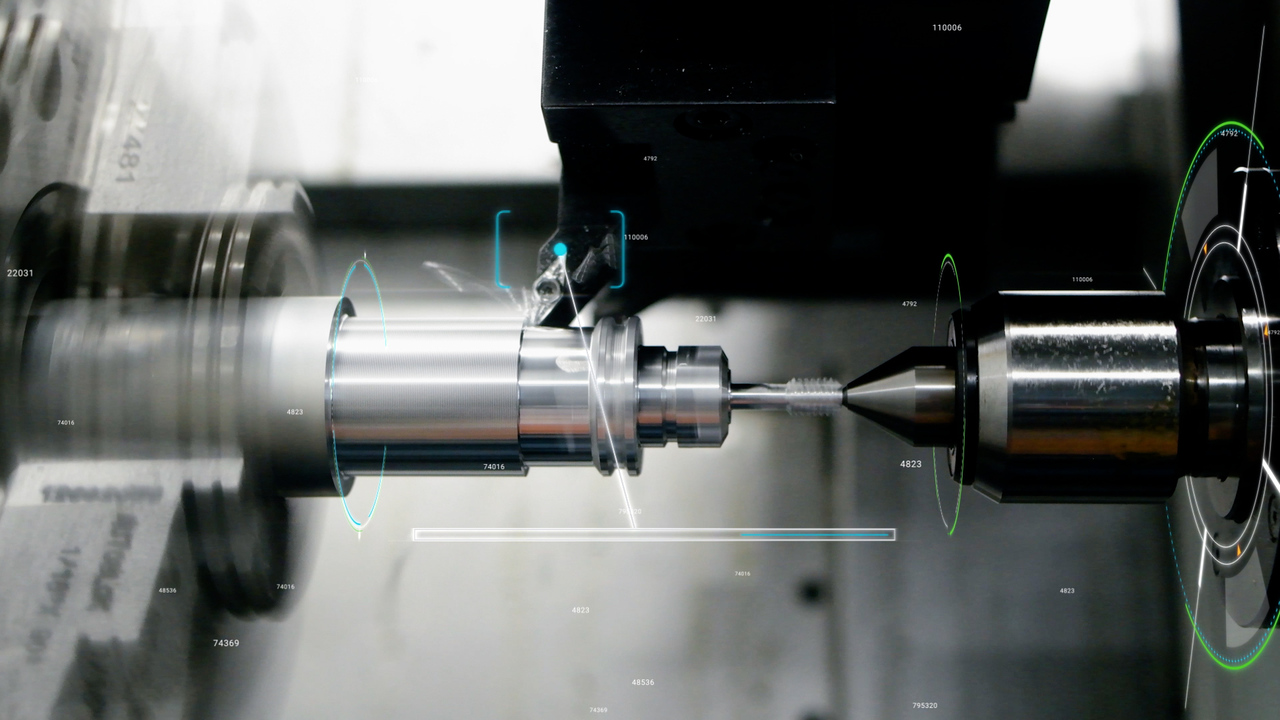
Industrial manufacturers face mounting challenges like rising costs, labor shortages, and disconnected systems that hinder productivity. PTC’s AI-powered solutions connect systems, data, and teams to turn these obstacles into growth opportunities. By modernizing operations, driving collaboration, and unlocking new revenue streams, PTC empowers businesses to innovate, optimize, and lead their industries. Watch the video to learn how these cutting-edge tools can help you build a smarter, more sustainable future.
null

The industrial manufacturing sector segments

Industrial components

Industrial components are the building blocks that make machines work and move. They span electrical, pneumatic, hydraulic, and mechanical systems, and are available in extensive catalogs that help machine builders efficiently design and produce customized machinery.

Machinery and tooling

Machinery and tooling bring components together into complete systems that drive production, enabling efficient manufacturing and energy generation across industries. They typically fall into two types—serial machines for specific tasks like cutting, drilling, milling, or welding, and special machines for entire production lines such as paper or glass manufacturing. These systems are sold and serviced directly to factories for reliable performance.

Heavy equipment

Heavy equipment handles the movement, lifting, and processing of materials in large-scale operations in industries like construction, mining, logistics, and agriculture. Excavators, cranes, and earth movers aid construction, while mining uses drilling and transport machinery. Harbors and logistic centers rely on container handlers, and agriculture depends on tractors and harvesters. Delivered via a B2B model, manufacturers and rental suppliers provide these machines directly to companies needing reliable, high-performance equipment.

How is the industrials sector evolving?

The industrials sector is evolving rapidly to meet changing customer expectations, manage rising operational costs, and address increasing competitive pressures. Companies are accelerating the adoption of digital solutions, system modernization, and industrial manufacturing solutions and embracing new business models to drive new revenue streams.

Industrial manufacturers are increasingly embracing a connected product lifecycle to support their digital transformation efforts. Approaches like results-oriented models reflect this shift—moving beyond traditional product sales to delivering ongoing value across engineering, manufacturing, and aftermarket services, thereby enabling greater innovation and transformation.

Macro challenges that are impacting the industrial manufacturing industry

Rising global competition

Globalization and cyclical industries are reshaping competition, requiring businesses to adjust their strategies in pricing, demand management, and global positioning to remain competitive.

Workforce shifts

Worker shortages and evolving demographics challenge businesses to attract talent and close skills gaps.

Pressure to innovate

Heightened competition and demand for personalization of complex products pressure businesses to innovate quickly while meeting customer expectations.

Rising operational expenses

Rising costs in materials, labor, and compliance require businesses to adopt cost-effective strategies to maintain profitability. Learn how improving operational efficiency can help mitigate these challenges and drive growth.

Internal pain points that are impacting the industrial manufacturing industry

Old infrastructure and siloed data

Industrial manufacturers face the challenge of designing and delivering precise, highly variable product configurations at speed, repeatedly. Outdated infrastructure or inadequate solutions can hinder this process, leading to delays, higher costs from quality issues, and increased risks of compliance or product errors.

Poor-cross functional collaboration and coordination

Outdated infrastructure and siloed data hinder an industrial company’s ability to collaborate and coordinate across teams. Poorly managed or inaccurate product data can undermine digital solutions, leading to production delays, costly errors, and time-consuming redesigns.

Labor intensive processes

In a world of disconnected systems and poorly managed data, maintaining accurate, up-to-date product information becomes a labor-intensive task. This inefficiency slows down design, production, and quality checks, driving up costs and delaying progress.

The role of digital transformation in the industrial manufacturing industry

Digital transformation is vital for industrial manufacturing, with modernized data management at its core. Streamlined data systems break down silos, enhance efficiency, and enable faster, more informed decision-making across the entire product lifecycle. By creating a single source of truth, manufacturers improve data accuracy and consistency—from engineering and production to aftermarket service. This fosters real-time collaboration, reduces costs, accelerates time to market, and ensures high product quality at every stage.

Explore Digital Transformation

Real-world results for industrial machinery components companies

PTC’s solutions are helping leading companies get ahead of the competition.

Trumpf-logo
bosch-logo-margin
festo logo margin
Eastern Lift Truck Co. logo
Schneider Electric Logo Margin
Vestas Logo
Koel

Discover How Trumpf Transforms Efficiency

Learn how Trumpf’s cloud-based PLM strategy enhances collaboration, streamlines data management, and drives innovation.

Watch the Video

See How Bosch Drives Product Development

Discover how Bosch Power Tools uses digital tools to improve processes, from initial design to final production.

Watch the Video

Festo

Learn how Festo uses Codebeamer to respond quickly to customer requirements.

Watch Their Story

Elevating Efficiency at Eastern Lift Truck

Find out how Eastern Lift Truck Company streamlines operations and improves customer servicing by transforming their workflows and processes.

Read the Case Study

Schneider Electric

ServiceMax offers Schneider Electric a breadth of functionalities as it fully and completely covers the end-to-end service delivery execution processes.

Read Their Story

Vestas

Vestas drove efficiency and improved workforce productivity with solutions that enable operators with digital work instructions.

Read Their Story

KOEL

KOEL reduced costs, improved productivity, and increased efficiency with solutions to better manage and share data across the organization.

Read Their Story

How can PTC benefit industrial organizations?

Maximize revenue growth

Monetize your installed base and boost workforce productivity by expanding aftermarket services like maintenance, field support, and digital offerings. Servitization helps industrial manufacturers unlock new revenue, reduce lead times, and deliver greater customer value.

Boost Revenue

Reduce costs

Improve profitability and gain a competitive edge with solutions that help lower costs of goods sold and warranty to optimize service execution.

Reduce Costs

Increase operational efficiency

Increase efficiency across the value chain from factory and field service asset efficiency to engineering productivity.

Increase Efficiency
Industrial machinery technologies

Application lifecycle management

Collaborate across disciplines more efficiently to build better software faster, reducing cost and time to market.

Computer-aided design

Design, develop, and document innovative products with parametric modeling, generative design, and simulation and analysis tools.

Industrial connectivity

Securely and seamlessly access the OT data you need to automate processes and maximize efficiency with enterprise industrial connectivity.

Product lifecycle management

Securely provide teams across the organization with timely product data that is managed with data governance and traceability processes.

Service lifecycle management

Deliver customer outcomes with the effective management of all service touch points across the product lifecycle with field service execution, service parts optimization, service information delivery, and more.