Product Lifecycle Innovation With Windchill and Windchill+
00:51 Please welcome Senior Vice President and General Manager of Product lifecycle Management at PTC Mark Lobo. Okay, everyone. Good afternoon. It's great to be back after four years. I love the energy out there. I love meeting all of you as an engineer. I'm always fascinated by end products like physical products like you see in those
01:21 videos. And it excites me to think about so much of innovation that has been put into those products. But then I'm reminded of a simple fact that behind every one of those stories of innovation and that's in the product, there's a ton of transformation going on in in those companies. Now, here's an exciting fact that most of the customers that you saw in that video are actually here this week, and they're going to be here to share their story with all of you.
01:52 So I encourage you to participate, listen, learn, share from those experiences. But I got a treat for you. I invited three of them to join me on stage to talk about their story. So it definitely is going to be a fun one. But before we get started, I wanted to take a few minutes and talk about PTC perspective on PLM and the strategy behind it. So PLM for us has really gone from being an engineering application to
02:25 a strategic enterprise application alongside with ERP and CRM that is turning the idea of digital transformation into reality. Manufacturing companies, like many. Of you here in the room, are leaning into PLM to really solve your. Toughest challenges, not just in R&D, but it's really across the value chain. Is it manufacturing its operations, its field service, its supply chain?
02:55 So I'm here today alongside with my guest speakers to share with you what we have learned about realizing enterprise wide digital transformation with PLM and also encourage you to share your experiences with each other during the next few days and how PTC can help you to transform your business. Okay, so many of you are wondering, Marc, what do you have here? It says PLM to PLM small PLM is how things have been for the longest time.
03:30 It has been starting with basic product data management of PDM. Now, you notice I didn't put PDM on that, but PLM, over the last 30 years or so, we've evolved a lot of the PLM technologies to look at engineering, building material, supply chain parts, classification change management. But that small PLM on the left is what represents the original role of PLM. It's that repository for CAD data,
04:01 for documents and ensuring that engineers in R&D were working off the same design revisions. But there's a lot more value to PLM and it doesn't really stop at the walls of R&D and engineering. We really have to look at breaking down those silos and that is what that small PLM is all about. Which brings me to PLM On the right, the big green PLM. This is PLM modern role as an enterprise platform for innovation across
04:32 the digital threat. Let me give you some examples of what we mean by that. It's grass discipline, governance, change and traceability. When you're working with your hardware, which is mechanical components, electronic electrical components on there, but also more importantly, software. So it's gone from an engineering bill of material to a bill of information that encompasses much more than you deal with today. It's also managing complexity in both product and process through standardization,
05:07 reuse and adoption of best practices. We also heard this morning Enterprise PLM is about making existing products greener by selecting the right materials and then also creating new green products. It's down to the model based digital threat from engineering to the factory to the shop floor into service, where we think about developing manufacturing, build some material for different plants of the single engineering building material
05:37 so that we can have dynamic work instructions that can capture the process for assembly disassembly. And once you get into the factory or into service, get that feedback from the factory and service to make your products better. This is about closing the loop. It's also the promise of SAS to facilitate collaboration and really foster innovation across the value chain. So this journey from small PLM on the left to enterprise PLM on the right is really
06:07 a continuum of value. And as many of you know , it requires time. It's demanding work. It's expertise and a vision and a drive to move along that path. You are all here at LiveWorx because you want to move your company to the right. It's more value to impact your business to society. And also I mean it the planet. So let me talk about some of the challenges that you're going to see and hear about
06:39 as well. Now, as I said before, I've invited three speakers to join me today. They are transforming their business not because they have to. Sorry, Not because they want to, but because they have to. The new challenges that they face are demanding their transformation in some shape or form. It's the same challenges that you all face. It's important to realize that these demands are not one that
07:10 a small PLM is going to help you with. There are new expectations that have been set , and we are here to help you meet them. So let me introduce the first challenge. Growing fast. Growing fast is not just doing the same stuff faster. It's about creating new business models with new products, adapting the same products to meet the demands of your customers and the environment is opening up new markets and introducing new digital services to complement those products.
07:43 Growing fast lets companies respond to disruptions and to also disrupt their competition, especially in markets where there's more and more differentiation that comes to software innovation. Look, we've got to make the products we have and the technology that we have and evolve them to make them better. It's about augmenting with new tools, new processes and expertise. A very simple example is a mechanical product that over time had
08:14 a lot more mechatronics with the electronics on there. And today that same product is defined by its differentiation through software. Think about aligning every engineering discipline around a common set of goals. This is the model based systems engineering view so that you can extend the holistic definition beyond the models based view that we have today, which is an engineering to the enterprise. So that's about growing fast. Next challenge. Optimize everything. The shift to enterprise PLM is no longer about just optimizing
08:51 the design. So what do we mean by optimizing everything? It's improving how components are procured and from whom, how and where products are manufactured, how they operate, how they are serviced, and really everything in between. The products are getting more and more complex and complexity is multiplied every time you add a new function or a new process to augment the product. So optimizing everything requires PLM as the backbone for
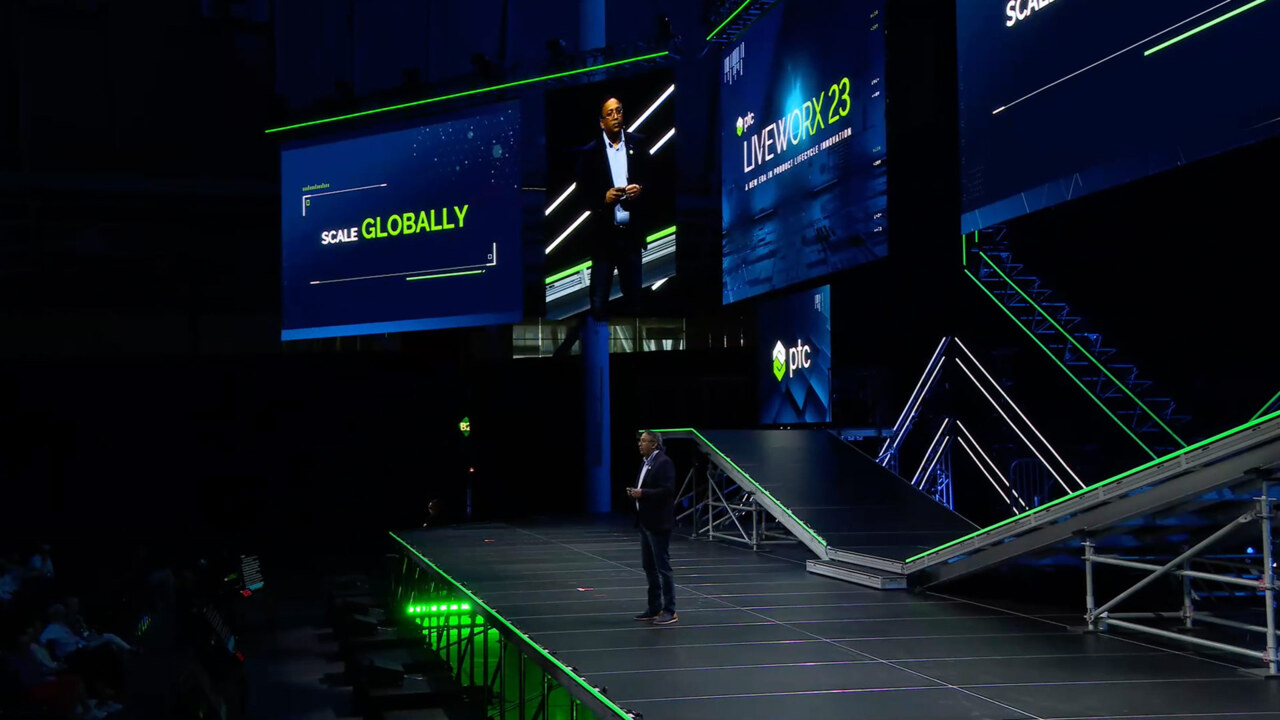
09:24 the model based digital thread. The same thread that Jim talked about this morning to manage both product and process complexity in all areas of your business. And how do we do that? By delivering accurate, actionable and up to date information. It's the only way to close the loop. To pull back valuable information and data from those processes downstream to inform the next iteration and generation of these products. Let me move on to challenge number three, scaling globally.
10:00 We've talked about efficiency quite a bit, but it's really been focused on the engineering side of the house. We're now talking about enterprise efficiency at scale, not just engineering. It's not just having teams everywhere, but it's really about adopting best practices by those teams. Here's another point. In the past. Unique way of doing design and manufacturing was considered as a competitive advantage. We don't think it's the case anymore.
10:34 Industries with proven best practices and relying on those is more efficient and more profitable than leaning into tribal knowledge. So the standardized practices that we have in PLM ensure repeatability and quality, the same product or the same part that is manufactured two miles down the street in your factory or halfway across the world through a contract manufacturer. That's what it's all about. When you think about moving to new markets and regions,
11:06 you no longer have to worry about meeting compliance or struggled to submit new regulatory body requirements. So aligning around best practices reveals an opportunity to automate and eliminate redundancies in both the product and process to improve quality and reduce time to market. So keep those three challenges in mind as we think about getting things into next gear here. This is where it gets fun. I'm going to invite Helmut, who from stage helmets from Schaeffler
11:39 and Helmet's going to talk about their experiences growing faster.
13:01 Please welcome Vice President of engineering applications at Kepler. AG Helmut Kubrick. Am I? Good to see you, Helmut. Good to see you, as always. Thanks for joining us. And thanks for in front of the audience here. So a couple of things. You know, on the automotive front, the industry is going through a historic shake up over the last decade or so. The whole move to electrification, electric power, and more importantly,
13:32 common topic we talk about is software driving a lot of the business. So this is disrupted ways of stability, right. Over the years and how shifts are responding to these challenges. And what role does PLM play when it comes to growing fast? Okay. Thank you very. Much. So, of course, a big role. Let me first of all, thank you to be on the stage to talk about PLM from the Schaeffler perspective and also seeing concrete solutions to the presentations this morning. It was a great opening, so really gave us a lot impulses, I would say, for the future.
14:06 So what does it mean for Schaeffler? As you have seen, Schaeffler is a technology supplier with system experience. I would say since more than a decade. We are delivering also systems doing systems engineering. On the other hand, we want to get even more innovative, sustainable and also efficient for that also. Schaeffler, like I guess a lot of other companies, implemented a program for digitalization, and we are really convinced that PLM is a booster and accelerator for digitalization at all. So if we think what it means to talk about PLM PLM consists
14:41 of processes, data, integrated infrastructure in it. So we need to understand our business. We need to understand the processes. I would say the roles and the answer from Schaeffler at the moment is to create create a kind of workplace. We call it digital workplace PLM workplace. And the aim is to bring all these information together and that to have opened on two screens, several systems, all this information, to have it in one context interactive and to say to to make the life of our designers and engineers really easier in that in that way.
15:15 So PLM workplace or digital workplaces that are currently our strategy. Yeah I really like the idea of a digital workplace, kind of a home environment for a lot of the designers to work on. Yeah, so you have a lot of things going on with respect to PLM in responding to all the all these needs, how has your approach to planning and executing these PLM projects changed over time and how do you need to grow faster with them Yeah, absolutely. So if you think the last ten years I had PLM projects under my responsibility over years, 1 or 2 years doing the concepts,
15:49 the rollouts and then it took years to get it implemented. In our business, this is not possible anymore at the moment, so we need smaller parts, smaller applications provided in the case of minimum viable products to accelerate the business, to get acceptance there. And always from the user experience and from the user perspective, it has to be done. So we have to be much, much quicker. We have to implement also new methodologies. There are like generative design, like simulation, all these powerful tools. This need also kind of mind change with our end users.
16:21 Otherwise it will be not successful at all. Where you go to and we were backstage talking about simulation and going fast again, a lot of the automation and getting that done. I know you have a session coming up as well and so invite you a big plug to to learn more about Chevrolet's journey. So again, thank you so much for joining. There was a few minutes. Absolutely. Good to hear you very much. All right. Take care, everybody. Bye bye.
16:51 All right. So guest speaker number two, Larson Novak from Vestas. And you saw a lot about what Vestas is doing today, this morning in Jim's keynote. So I've invited Lazard to talk specifically about what it means to optimize everything. Vestas is changing how the world produces energy, connecting decades of experience and continuous innovation with local insight.
17:22 We're creating complete renewable energy solutions to lead the energy transition into the future with more than 100GW of installed capacity. We have reached a significant milestone on our journey toward a world free of fossil fuels. Our services and solutions are designed so that our technologies continue to scale and adapt, delivering sustainable energy in a multitude of combinations and to some of the most diverse landscapes on the planet. For us, everything is connected.
17:54 Performance, innovation and purpose all come together to create positive change. At Vestas, this is our ambition. A world solely powered by renewable energy. Please welcome head of engineering development at Vestas Wind Systems as Larson Novak.
18:26 NASA. Thanks. Thanks for joining me. So let me tee this up. You got a good taste this morning. And Jim's. Jim's presentation about Vestas. So renewable energy, global imperative. One would think that business is easy. But as I understand it, in talking with you as well, there are serious challenges that the industry faces. This is one that was always interesting to me that every wind farm that you see multiple wind turbines is unique. So that's that's a challenge.
18:57 Obviously, you have tough competition and you have difficulty in meeting the rising demands. Right. In a profitable way. That's that's key. So how is Vestas responding to these kinds of challenges and what role does PLM play to optimize everything? Yeah, thank you. It's a really, really interesting question. As you saw from the video, we put up turbines everywhere, so at best we recognize that each individual site comes with its own environmental
19:27 requirements and challenges. And the same thing applies for the logistics of how we handle the construction of each site. And as a result, PLM is imperative to really solve some of those problems. Secondly, we also expect a tremendous growth in the next decades and probably in the years after that as well when in the renewable sector and for the same reasons, we need to make sure that the products we have are modularized and industrialized so that our value chain can keep up with
19:57 the massive growth that we predict in the future. And there again, PLM plays a vital role in making sure that we have the digital threat and the traceability in our higher value chain in terms of how we manage all of those digital assets and how we optimize everything from how we make our products on our design, our products, and also how we handle logistics. We have also had our fair share of quality problems and thus far the wind turbine industry has been a race for basically having the biggest product.
20:30 It's slowing down a bit now and it's preparing for what we predict will be more of a scale for industrialization. But because of that, we have had our fair share of quality problems and we really believe that PLM is also at the core of addressing the problems we have in this regard with the traceability and the meaningful, wonderful features that PLM brings. Finally, we also see sustainability being at the core of PLM and basically we are preparing for that as well with our PLM setups. Okay.
21:04 Let me let me touch a little bit more on the on the sustainability piece because I think it's important. So earlier you talked a lot about optimizing for profitability, for quality, for scaling, but given you're the leader worldwide around renewable energy. Anything specific you can share about what you're doing to optimize for sustainability? And how does PLM kind of fit into that equation? Yeah, so, so basically you could say we are doing two two different things at the same time to optimize for sustainability.
21:35 The fact that each individual site is unique actually presents an interesting opportunity in terms of embracing sustainability, because if you can optimize your products for that individual site, we can take out massive amounts of materials, which is not only bringing us more competitive competitive products and hence it's a good thing for a value proposition for our customers, but it also allows us to reduce the mutual material consumption that comes with it. The same thing applies for the for the logistics part. If we can optimize that, obviously it means less consumption of material and in
22:10 a much smaller carbon footprint. Similarly, we have also seen today that Ansys grants and are making their efforts to really bring in base materials into the digital domain, and we have been doing that as well. And the purpose of that is to make sure that we can do a digital link between our base materials and our products so that we can make the choice of which materials to use something that is a conscious choice for the design engineers, as well as allowing configuration of those base materials to be something that our customers
22:42 can actually select. And then you can say that then we achieve the ultimate goal of making sustainability something that becomes a conscious choice as opposed to something that is you could just the passion of certain individuals. Yeah, fascinating. I know we're going to continue to work more on the whole Grant aPriori integrations with Windchill, so looking forward to that, but thank you for spending time with us. And again, another plug. Last is going to talk a lot more about what Vestas is up to. So thank you again for joining me. Pleasure, as always to spend time with you.
23:12 Thank you so much. So last. But definitely not the least speaker is Reggie Foxton from JAG MedTech. Again, I've invited Reggie here on stage to share Jay's perspective and his perspective on the challenges and benefits from growing and growing globally and scaling globally with PLM Reggie.
23:44 As a combined force of amazing talents surging forward with our promise, our innovative and agile spirit is fueled by an unquenchable desire to improve lives. Together, we are working to create smart, more personalized and less invasive solutions for patient's exact needs. Please welcome Senior Director of PLM and Advanced Engineering at Johnson and Johnson Reggie Faustin.
24:15 Good to see you, Reggie, again. So totally different vertical, right? We had automotive, we had industrial, and now we're touching on a topic that's near and dear to many of us, which is medical device, because it has some of the most rigorous quality and compliance requirements. But it also is close to home because anything we do there affects the well-being of people whom we love and care for as well. So since it's linked to such an important part, there's a tremendous amount of effort and can be a challenge. So for a company like J&J, with so many divisions across the world,
24:49 how have you overcome this way of working and what do you think is the role of PLM as you scale globally? You can share some of that with us. Sure. So so first off, J&J is a huge business, J&J, MedTech. We're approaching about $30 billion now. But with that, we have a very big history of serial acquisition. We have dozens if not over 100 different operating companies. And really that serial acquisition, that history has left us in a place where we're not one monolithic company.
25:22 We're really a number of different small companies, but we have a lot of fragmentation. If we think about the acquisition and the integration plans, we typically didn't look at the engineering systems, right? We looked at some of the others. So now we have this landscape from decades that we need to really harmonize. So that's really one of the factors that PLM really helps us with. But I also want to talk about how we achieve compliance. So on all of our medical devices, we ultimately do achieve compliance, but there are many different ways you can do that. A lot of operating companies actually had very, very low maturity systems,
25:55 even some working on paper. So you can you can actually be compliant working on paper. But as you grow your business, it takes more people, it takes more dollars to do that. So now what we're doing is with the PLM, with the PLM strategy, is we were building a roadmap that's going to take us from a more document centric approach to a more data centric approach. And really evolve our capabilities and then bring everybody into that ecosystem. And when I talk about data centric and ultimately Indian traceability, our roadmap touches on things like starting with change control and Doc management,
26:28 getting CAD into the system, building out our product definition with parts and bonds, attaching the DMS and GF and so forth, and then working towards the European integration. But you can imagine though, that in that environment that historically has been decentralized and I'd say R&D people's desire for autonomy as well, it really takes a culture change. And so we really have to have commitment from the top. It has to be a mandate from the top to drive the change. I think this idea of, you know, driving change but standardizing and otherwise,
26:58 every team's going off and doing their own thing. So you've come a long way for sure. But as most PLM programs, as they move forward, as you've got further into the deployment, what are some of the key learnings from your team that you could share with the with the audience today about specifically about the scaling globally concept that we talked about? Yeah, sure. We've been at this for about six years and we've definitely learned some things. And the first one I'll touch on three main themes and one is that implementations are difficult and things won't be perfect.
27:31 A second is that we really have to spend time understanding where the value is delivered from, from the implementations that we're doing. And then third is we have to have commitment to the long term. So I want to talk about each one of those a little bit more. So in terms of inflammation being implementation being difficult, we're getting into larger and larger parts of our business. And we recently had a deployment where we brought about about 5000 users on and we had to level set with management that to bring 5000 users on to be touching all of the processes that we go through in engineering,
28:02 the realistic time frame for everyone to fully understand and adopt that change in working could be years, right? But we really have a lot of time pressure to keep our implementation going. So we took a strategy of training the whole organization, but really looking at the key users and building a key, a lead user community base. We took a look at making sure we pressure tested all the functionality, of course, to make sure that that's working. And then as we go live, we also set realistic expectations on we would have a little dip in productivity, but we'd ultimately get there.
28:33 So a strong hyper care philosophy as well. Second piece is that on spending time to find ways to document value that really ties into that third bullet about this being about the long term. So when we look at our sponsor team and we want to make sure that they are invested in knowing that this is a very long journey, that we have already been at this for years and there's years more to come. We have to think about the value. So with each one of our deployments, we then look at the capabilities we're bringing in. We look at the user base and we look at how are we changing efficiency for
29:05 the organization. Because if you go back to that idea that organizations were doing this practically on paper before and throwing people at it, there's a lot of efficiency to be. Gain. So we really work hard to document that efficiency, to build that value case and to keep that in front of our sponsors so that we all stay hand in hand and stay committed in the long term. Yeah. Thanks. Thanks for sharing those insights. Always a pleasure. I always learn something new. Thank you so much for joining me. Thanks. And again, Reggie's got a session. I recommend you visit that as well.
29:38 Okay. So we've just covered with Helmut Lassa and Reggie that there's an incredible amount of effort that goes into transforming the business and driving change. These stories, they really represent years of work towards a greater and greater value with enterprise PLM, that big PLM we talked about. However, we think there's a lot more to be done as well as you want to take PLM to reach and deliver more value and to touch more stakeholders in the organization.
30:10 We firmly believe that PLM is that vehicle to accelerate innovation, drive adoption and eventually a faster time to value. Why is this all important? You heard a lot of the challenges there because we think that there's a way to accommodate all of that and get to that value faster, which is a big reason why we released Windchill plus Windchill is our Windchill plus is our SaaS application that's delivered as part of the plus family of products. So you heard about Creo Plus today.
30:41 Windchill Plus is the exact same application that you have today. So when you move to Windchill plus as a SaaS application, you won't lose any capabilities. In fact, it's the plus where it is Windchill plus a lot more. What are some of those more things that you're going to get? Number one is you're going to have complete compatibility with Creo Plus. So tear up those compatibility matrices between Creo and Windchill that you're so used to looking at and tearing your hair out. Over time, they're going to deliver SaaS only capabilities with Windchill plus.
31:14 But think of these as capabilities that are truly natively SaaS That makes sense in the cloud. Things like using machine learning, artificial intelligence to provide business insights into your deployment of Windchill Plus, when we developed Windchill plus, it was really about saving you time. This is time saving that can be measured in months and years and not days and weeks. What's the value behind that?
31:45 You can now accelerate the adoption and maturity of your enterprise PLM to grow fast. Windchill plus is also a mechanism for you to leverage our expertise so that becomes your advantage. We talked a lot about best practices. Windchill plus comes with Pre-configured best practices based on decades. Well, I take that back centuries of experience that we have that we can make it
32:15 easier for you to optimize everything in your Windchill deployment. We've also developed Windchill plus so that we can help shoulder that responsibility and the demanding work to support your global digital transformation initiatives. Think of us as an extension of your I.T. team to operate that enterprise system in a more secure environment where cyber security is built in, while you can focus on scaling globally.
32:45 So at the end, you're going to benefit from our vision on the future of PLM as I just presented. So no more waiting for upgrades. You now will have access to the latest and greatest capabilities and as I said, SaaS only innovation. You are all here and we hear your stories. You all do amazing things with Windchill with Windchill. Plus we are ready to get on that journey with you and only when you're ready. All right. That kind of gets me to the end.
33:15 So how to make the most out of LiveWorx that you're here? So please take the time and the advantage of this opportunity to have a bigger impact on not only your companies, but the larger business at large. We want to encourage you to take this time to share your experiences with each other. And what does Enterprise PLM mean to you? Even if you're just getting started on the journey, we also encourage you to learn about what's going on from PTC and how we can help you
33:48 on that enterprise PLM journey. If you go down to the Xtropolis, you'll see a lot of the innovation that's gone into Windchill ThingWorx navigate Creo view that will show you that path to innovation. There's also UX labs that you sign up for that will talk about what is PTC doing to further you on that PLM journey. So again, thank you for joining me today. It's so great to be back here in front of all of you. Thanks again for your time and please enjoy the rest of the event.
34:19 Take care, everybody.