Bobcat Industrial Innovation - Prototype Testing
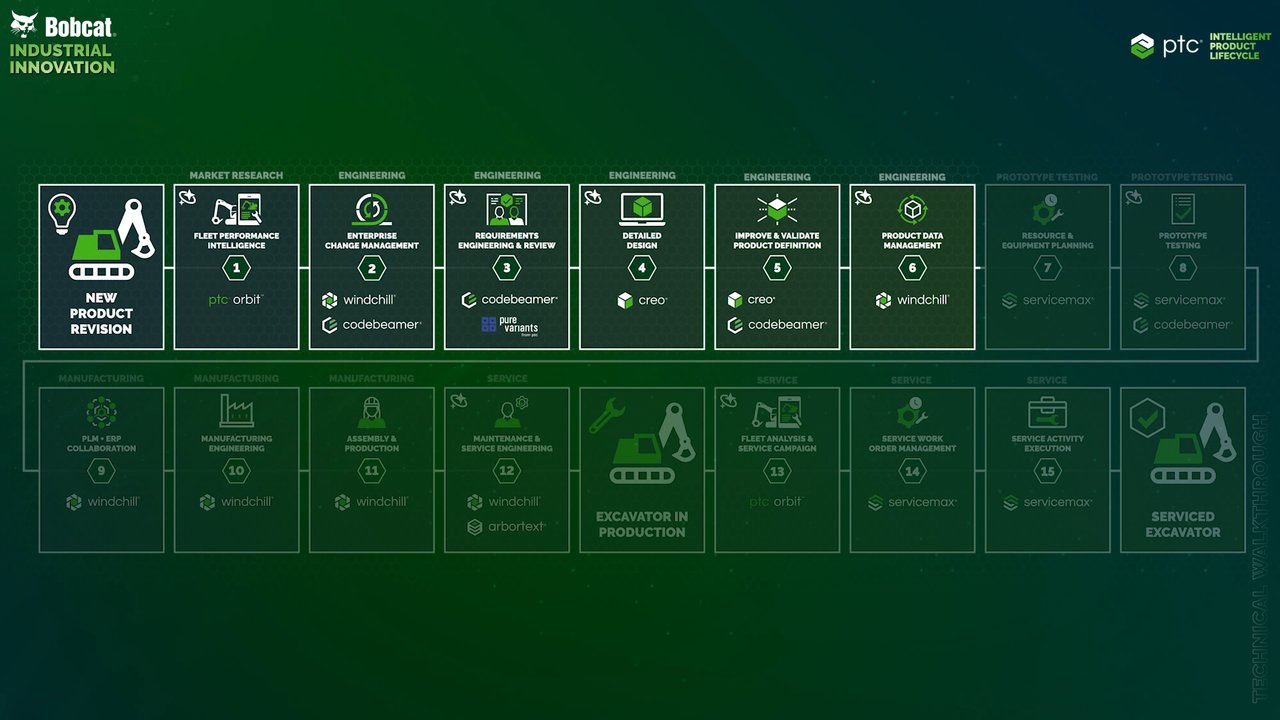
00:00 So far in the Bobcat demo, we've explored market research and engineering, where we began by using PTC Orbit to capture and analyze product usage insights for the Bobcat E17Z, then concluded the engineering design and change process for the new swing frame. In prototype testing, we'll take a closer look at ServiceMax for prototype test execution and Codebeamer as the backbone for test management and test records. With all design changes and product optimizations implemented, the engineering
00:31 team plans to conduct a new prototype test on the E17Z with the new swing frame. Linked to the design and functional requirements of the excavator project, this is the test case which our team has defined in Codebeamer. For this test, the team will run the excavator for several hundred hours of normal operation and perform periodic inspections on wear, focusing on critical parts like the swing frame. Here, we're taking the perspective of the test manager to review test run work orders using
01:01 ServiceMax Kanban view and charts, which we can use to monitor status and progress, prioritizing and approving execution based on our team's workload and readiness. We'll first review the test run details and the test run work order, including associated test cases and steps, ensuring procedures are complete and aligned with the assigned E17Z prototype excavator. Test definitions originate from Codebeamer, while the prototype configuration and BOM are sourced from Windchill, ensuring full engineering consistency.
01:34 The test run work order also specifies required tools, equipment, and safety prerequisites to support proper execution. Each instruction step is enriched with contextual information, including photos and videos, enabling clear guidance for the test engineer. This approach reduces errors, minimizes rework, and ensures standardized repeatable execution across all test activities. Next, we'll review the E17Z prototype excavator asset, verifying the prototype BOM
02:06 configuration and analyzing its evolution across the life cycle. The asset timeline allows us to assess past and upcoming test activities. ServiceMax manages both work orders and assets, providing full visibility into configuration, history, and planned prototype validation activities. Fueled by ServiceMax AI, we'll schedule test runs across test benches, locations, and engineers, considering required tools, equipment, and resource availability. ServiceMax ensures optimal allocation of engineering resources for
02:39 prototype validation activities. This centralized scheduling view gives us full visibility across all test runs, improving coordination and reducing delays. This drives higher productivity, better resource utilization, and more consistent execution. From an engineering perspective, it ensures test readiness, accelerates validation cycles, and supports faster data-driven product design improvements through structured and repeatable test execution. Switching perspectives to the test engineer,
03:11 we can now review our assigned test runs in the ServiceMax Go mobile app, analyzing our weekly agenda, status, priorities, and duration of activities. The mobile app provides full functionality, including access to schedules and details, even offline. Here, we can also use ServiceMax AI summary to quickly understand the scope, steps, and context of our test runs. Interactively asking AI questions about the product and procedures clarifies instructions,
03:41 reduces ambiguity, and ultimately improves the confidence and efficiency of our service execution. Now, let's execute our tests on the prototype swing frame. The first endurance test preparation steps, installing the new swing frame and setting up the instrumentation and telemetry monitoring, have already been completed. During the five hundred hour test run, the team performs inspections every fifty hours on critical components and documents any findings. For example, if our team notices a non-critical weld seam issue on the boom swing,
04:14 they can report it directly from the field by capturing pictures in ServiceMax Go. After our team completes the five hundred hours of endurance testing and found no critical issues, we can close the work order by adding some final comments. Test run results from ServiceMax are recorded automatically in Codebeamer, providing full traceability back to the test definition and underlying product requirements. In this section, we've completed prototype testing for the redesigned E17Z swing frame.
04:48 We've seen how ServiceMax drives consistent test execution in the field, while results are captured back in Codebeamer as test runs, maintaining traceability to the original test definition and requirements, and enabling our team to drive continuous improvement, standardize working methods, improve availability and accessibility of accurate information, and enhance governance and life cycle traceability.