Bobcat Industrial Innovation - Manufacturing
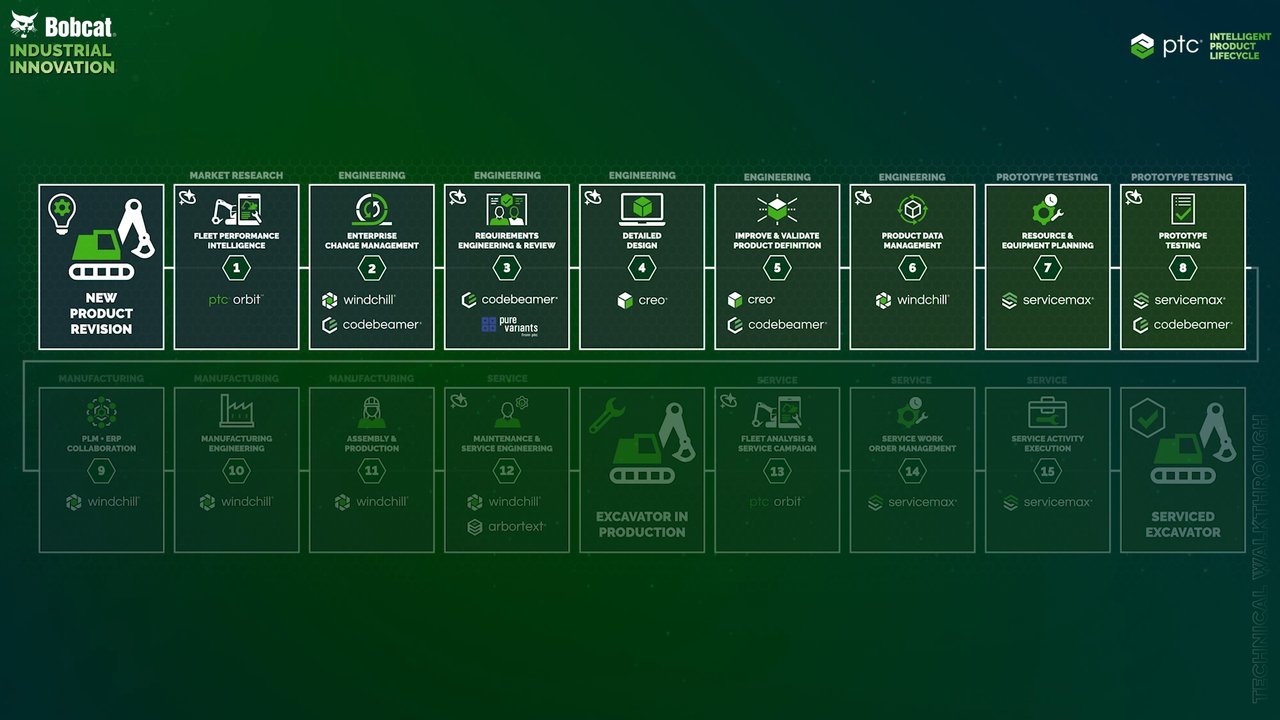
00:00 In the Bobcat demo, we've explored market research, engineering, and prototype testing, where we began by using PTC Orbit to capture and analyze product usage insights for the Bobcat E17z, concluded the engineering design and change process for the new swing frame, then conducted prototype testing on the new part. In manufacturing, we'll see how engineering changes flow seamlessly into downstream manufacturing engineering processes, and how Windchill helps keep data consistent across
00:31 ERP and the factory floor. Windchill can integrate seamlessly with ERP systems like SAP. Engineering can manage multiple distribution targets for BOMs in Windchill, supporting modular structures and synchronized data handoffs to decentralized ERP instances across different manufacturing locations. In this example, the E17z is an established product that Bobcat has been building for several years. As a result, the ERP system already contains the last released version of the swing frame assembly used in production.
01:05 After the new swing frame and the updated engineering bill of materials has been released, we'll take the perspective of a manufacturing engineer to apply the updates to the manufacturing BOM. In Windchill, different BOMs are connected and create a single traceable path from design intent to how the product is built. Changes to parts, alternates, and effectivity can be automatically propagated and compared across structures, reducing manual re-entry, minimizing errors, and accelerating downstream planning.
01:36 Once the changes have been applied to the manufacturing BOM and released, Windchill automatically publishes the updates to ERP, keeping the material BOM current, eliminating manual entry, and minimizing inconsistencies in data. In the ERP system, we can now see that the material BOMs have been revised and updated with the new swing frame part number, both in the manufacturing location in Dresden, as well as in Berlin. Now that we've updated the manufacturing bill of materials, the next task in the change process is to update the impacted
02:09 manufacturing process plans. In Windchill, process plans define the step-by-step operations, resources, and work instructions needed to build a product directly linked to the manufacturing BOM for synchronized change and full traceability from design to shop floor execution. With a direct link to the manufacturing BOM, the process plans are already updated with the new swing frame part. This process plan defines the step-by-steps process for the assembly of the swing frame to
02:40 the upper structure of the excavator chassis. Each step can include resources, operator skill level, tools, control characteristics, and consumed parts from the manufacturing BOM. And each operation can include several 2D and 3D animated illustrations generated from CAD representations of the consumed parts and required tools. Here in Creo Illustrate, it's easy to update these illustrations with a redesigned swing frame because the application automatically detects out-of-date parts and refreshes the
03:12 content to the current version. With updated manufacturing process plans, we'll switch perspectives to a manufacturing operator to review and consume the swing frame assembly work instructions directly in Windchill Navigate. Windchill Navigate extends PLM access to a broader audience with role-based apps that make it easy to find, view, and act on the right product information without needing full Windchill expertise. By delivering controlled, up-to-date views of parts, BOMs, documents, and change status,
03:46 often structured in familiar task-focused dashboards, Navigate improves cross-functional collaboration, reduces time spent searching for data, and helps teams make faster, more consistent decisions across engineering, manufacturing, quality, and service. The Navigate work instructions app gives operators access to the latest approved work instructions directly from the process plans in Windchill. For each step, we can see the operation description, consumed parts, required tools,
04:16 related documents, and illustrations, reducing the risk of errors caused by outdated instructions or missing information on the shop floor. Navigate is role-based and read-only, so the viewer ensures that every operator follows the same standardized process using controlled content, supporting quality, training, and compliance. In this section, we've seen how Windchill connects engineering and manufacturing data from engineering BOM to manufacturing BOM to process plans and publishes approved updates
04:48 to ERP, keeping plans aligned and reducing manual re-entry. We've also seen how Windchill Navigate delivers the latest controlled work instructions to the shop floor to support standardized execution, quality, and compliance, and how managing manufacturing with intelligent product lifecycle streamlines generation of downstream deliverables, optimizes manufacturing planning, and improves knowledge capture and management.