Empowering Diverse Global Teams at ZF
00:04 The entire automotive ecosystem is moving at lightning speed. There are dozens of up and coming car companies and suppliers fighting to remain competitive. Cars are now updated with over the air software. Electrification has become commonplace. Hydrogen fuel cells, shared mobility, autonomous driving it's all happening at the blink of an eye. Businesses need to adapt quickly and collaboration must be seamless.
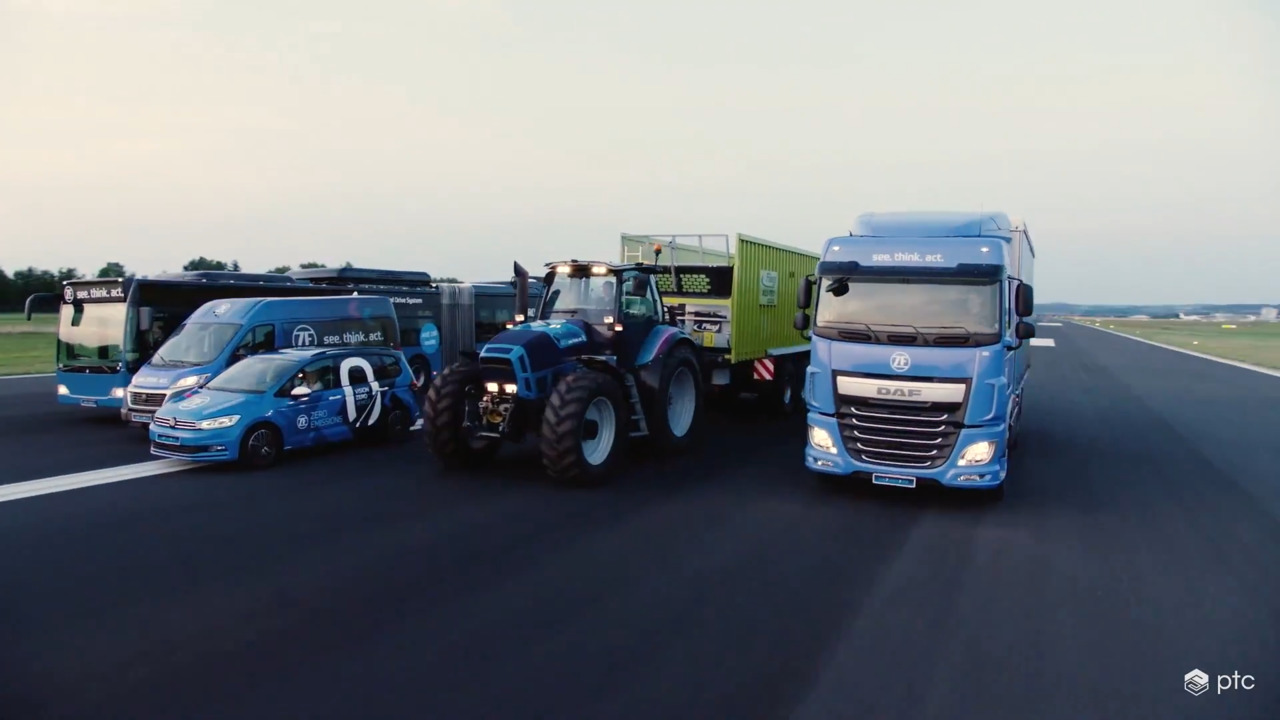
00:35 One of these companies is ZF. Zf, one of the largest and most respected tier one automotive suppliers, is at the forefront of this innovation, designing, manufacturing and servicing the driveline, chassis and safety systems for passenger cars, trucks, buses and motorcycles. To remain competitive with the rapid changes in the industry, they have to keep pace and adapt. Wolfgang Rudell has been at ZF for 20 plus years.
01:08 During his career at ZF, he's done everything from designing disc brakes to working on the quality side of engineering to new product technical sales. Now in the electronics division, he shares his perspective on how ZF has put digital at the core of everything, enabling a radical redesign of almost all their business models, processes, products and services.
01:40 We had major changes there in the last years, where we come from this traditional divisional thinking, that okay, there is the Active Safety Division selling a brake system, there is the C division selling the suspension system. Now we are more working in so called system houses where all the different divisions working together on one product so that you don't have these boundaries anymore.
02:11 It's more virtual teams across the globe with the mindset of we need to deliver this one system to the customer. You're using Wachel across your businesses, but tell me, how is that helping? Because we are now all on one system and able to use the same data, it's really just one flow, we are developing the ECU or the PCBA for an electronic brake booster.
02:41 The Active Safety Division takes our product, our bill of material, put it into their bill of material, and we can see directly that when we are changing something, it's impacting their production, so we can include them much earlier into design decisions. We can include them earlier into change processes and the same way the other way around. If they are seeing some issues with the installation of our PCBA in their product, they can directly request a change to our component.
03:11 It's working together in the same data set and being able to see the impacts right away. There's currently an effort to also unify ZF's IT landscape by connecting their various CAD tools. On the authoring layer we are looking where is the best value for us. So that's why we have various MCAD tools in place. But on the ECAD side we just have one. Also on the software side, we have a very strong software for ZDF initiative that harmonized the software development.
03:44 But at the end everything comes back to the product and we are connecting the CAD systems into WindChill so that we can drive the bomb structure out of the CAD structure. But we can also, if we are updating the bomb, automatically update the. It's one data set for the product, so we are also now trying to merge it even with more data in the digital twin. The main benefit for us with WindChill is that it's open. We are not forced to use just one CAD system
04:15 or one requirement system, we can connect to the best. Nadine Grohs is configuration manager for ZF's advanced next generation steering systems that allows drivers to whip cars around tight city corners with more agility than ever before. She says a lot of our customers want to customize the embedded software, which involves working together and collaborating with Wolfgang's Electronics Division to fulfill customer requests.
04:45 You have to work with other parts of ZF, for example the electronics division. So how do you collaborate with both of those? The responsible Department creates a new change request in the WindChill system to document the request and the request number of the customers, which have really good reliability there, traceability, then I can also involve the team from the division U, so our electronic group and can directly bring them into our CR and they can really
05:19 collaborate with us together in that one work item in the system. We can really share the documents so everybody is on the same information level, have the same documents available there and can then directly put the decision in the same CR in the same item. So you really have all the information together there. Quickly sharing information is critical but also comes with a security risk, especially when distributed teams are working remotely.
05:50 I went back to Wolfgang to learn more. How are you dealing with that and sharing data with your customers and partners. So outside the firewall, what we have implemented in WindChill itself is a very strict access control model where internally we are able to see what we need to see. So I can go in and search for something. If Division R or Occupant safety system division has it,
06:21 I can reuse it so there is not lock up for me as an internal user. But if we are collaborating with our partners developing, for example leader sensors, they can only see their specific set of data inside WindChill. So we are using the project link to share the data with them. We can control what they can see, what they cannot see. The way you're using WindChill is really out of the box using the standard processes. But then for role and task based apps
06:54 that's when you're bringing in ThinkWorks to then deliver data. What we are trying to do is avoiding WindChill customizations and putting all this into a ThinkWorks app that we can control where we can also give a lot better user guidance. You can do an app very fast, very effective for a small user group. If you're trying to do this in WindChill with the customization, it's a huge effort with developing it, testing it, UAT build control.
07:26 I was never thinking that I would be able to deliver 24 standalone apps related to WindChill with one year, but I'm in the middle of it. I already have six new ones just coming up the last three weeks. With this incredible rate of change, ZF must also ensure the right product is delivered from the factories to the customers and that they are not missing important pieces of information. ZF is currently doing a huge initiative
07:57 in the factories to implement a digital dropfloor. So not like in the past where you printed out the papers, putting it on the board, on the quality validation use cases, we are reducing the amount of errors there. With AR we cannot stay focused for 8 hours on one and the same activity. That's impossible for a human. And that's why AR helps us to get this repetitive task fully automated. With AR you are just going with the handheld device around the product and everything is done.
08:29 In the past, the worker needed to take the camera, to take all the pictures. Then he needed to transfer the files to the PC, to put it to the right serial number. All this is now fully automated and in addition we are doing this plausibility check of the label to the product shape that was possible before. As a global automotive leader, ZF is also aware of its impact on the environment. The manufacturer's target is to achieve climate neutrality by 2040 and an 80%
09:02 reduction in CO2 emissions at its facilities by 2030. We want to be CO2 neutral as soon as possible. WindChill is helping us here with calculating the CO2 footprint of our products. We also want to calculate the footprint as soon as possible in the development process and also base our design decisions on the impact on the CO2 footprint. With WindChill data you can forecast how the real product will look like and with this data you can put it
09:33 into a CO2 calculation tool and then calculate different design options. Which one will have the best CO2 footprint? With nine divisions and 150,000 employees spread around the globe, organizational change of this magnitude does not come without challenges. How are people adopting this? We just had here on the Copelands plant, a new initiative about the whole future
10:03 of Copelands and being an innovative location of ZF, including the unions helping out here to shape the future of the different locations and that help people, especially on the production or on the working level to really participate on these changes. So they are involved in all these things. If you are involved and you see the benefit that is coming out there not only for the staff but also for you personally having all these new
10:33 opportunities, having all these new amazing stuff to work on, that's how we are trying to convince our people that adaption is something good. What does this mean to you personally. For me being part of this whole WindChill implementation since 2012. Now it's an amazing personal experience around the globe. We are working together making something incredibly happening. Where in my first workshop about WindChill
11:04 ten dot one, after the workshop my boss told me this will never happen. We will never be able to do it with great colleagues around the globe. I was part of it to make it happen. We have implemented the foundation. It's still growing, still getting new opportunities every single day. As I told you six new applications on ThinkWorks within the last three weeks. It's really fun to deliver something and I'm the kind of person that is motivated by delivering success.
11:38 ZF's journey is an exciting story of digital transformation with PLM as the foundation in building the next generation of clean, safe and affordable vehicles ZF is revolutionizing business models, processes, products and services for a better and brighter future with zero emissions, zero accidents and zero downtime.