Emerging Technologies Roundtable: The Model Based Enterprise
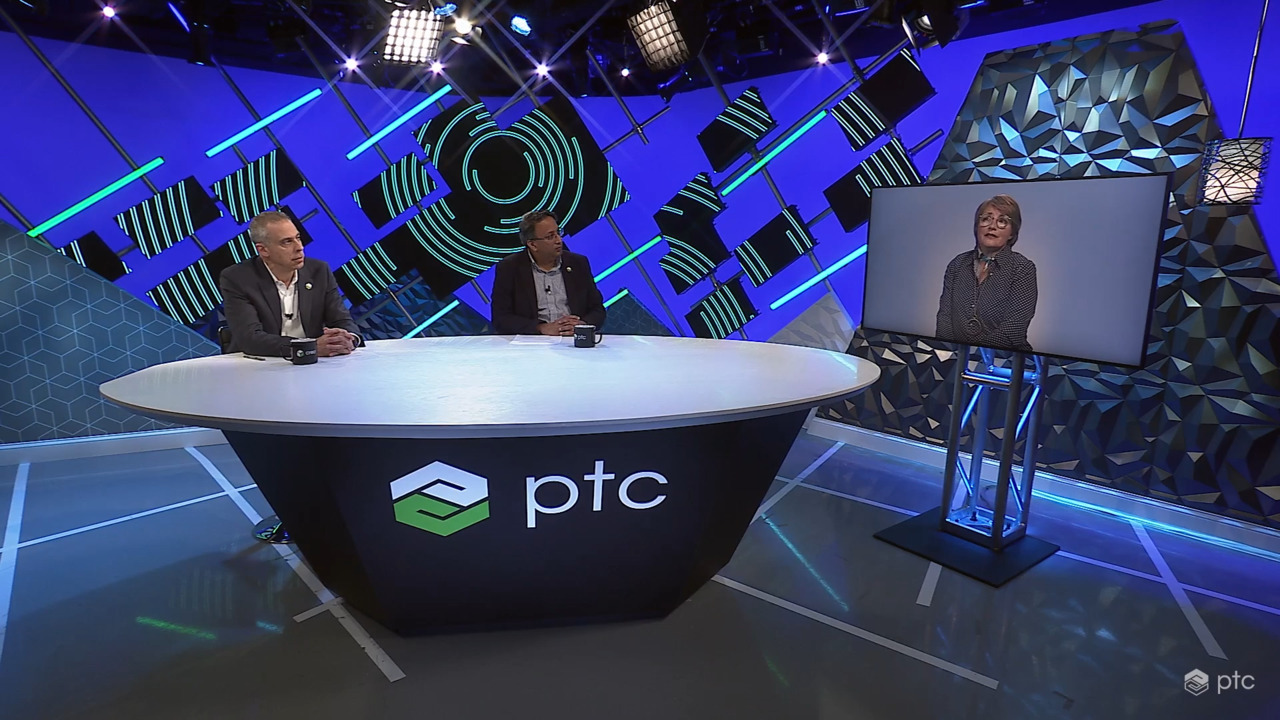
00:10 Welcome to the Emerging Technologies Roundtable. I'm joined today by Sylvine Datry, Global Channel PLM Senior Director, and Brian Thompson, Divisional GM of PTC's Creo CAD business. We are here to talk about model based initiatives such as model based definition and model based enterprise and how they can and are helping companies like yours improve quality and efficiency of processes across your business.
00:41 So let's get started by setting some context. What's really going on in the world of technology and business that is making model based approach so appealing. Sylvine, I'm actually going to start off with you. Given the amount of time you spend with customers, can you tell us what you're hearing from them? Sure Mark. So, thinking about our customers and collecting feedback, either from the customers themselves, either from the partners working with the customers, we see three key challenges which are
01:14 impacting their costs, their quality, and their time to market. So the first one is efficiency. So we still miss good collaboration between the different organizations, departments, between the different geographical sites, and with the extended enterprise. This lack of collaboration ends up with traceability challenges, finding the correct information and updated information.
01:49 Another dimension here is regarding the communication. So communication is challenging because we have a lot of information going on and this is difficult to know what is important and what is not important. And the format of the communication is also a challenge. We have seen 2D drawings, 3D models, text, and also emails going on. At this point I'd like to highlight the fact that we have aging workforce
02:22 and this is a lot easier for the new workers to work on 3D models. The second challenge that the industry is facing now is regarding the quality. So when we talk about quality, we talk about quality as well as non compliance. The 2D drawings are difficult to understand and they can be misinterpreted and this leads in non compliance.
02:55 What I see also is that this is difficult to understand what are the critical characteristics, what are the critical information regarding quality and to follow up with information along the product lifecycle. Last but not least regarding quality, this is about the lack of closed quality feedback loop. So here we talk about being able to follow
03:25 the requirements and to validate them along the product lifecycle. The third challenge that we see is regarding the time to market, which is impacting a lot the competitivity of the customers. There is a gap between engineering and manufacturing in terms of doing concurrent manufacturing. So they still work in sequential processes instead of concurrent processes. And we see a lot of manual handover going from engineering to manufacturing,
04:01 which is creating errors and which is making the information difficult to find from the plant in order to be able to do their activities. So this last point is really impacting the competitivity and they are missing potentially some product launches with delays, which is becoming a hot topic for the customers.
04:32 So we have really good insights there. In fact, funny story, just the other day, I happened to look back at some of my archives and I found this actual 2D drawing. And I was showing it to my 15 year old and like, dad, what is that thing? I see you're doing all stuff in 3D and here you have a drawing. And it didn't make any sense to her just to see that. Brian, I know you and I've spoken about this whole transition from 2D drawings to 3D model based.
05:02 What are you hearing? I'm sure you're hearing a lot about this as well. Yeah, and you're right. So being set, really excellent context for the conversation. It was really great summary of all the challenges our customers are having. And what we're finally seeing now is the opportunity for customers to get serious about not spending time and energy on the derivative 2D artifact - that's really all the 2D drawing is, generally - if the 3D environment is fully capable of capturing what's needed
05:34 to properly collaborate, to communicate all the needs to do all the things to solve all the problems that Sylvine outlined, the 3D object does have to take on like, more responsibility. And finally, the technologies are there now, so customers can, instead of worrying about spending really non value added time and creating a 2D artifact, they can focus on building all the information necessary into the 3D model in order to capture what's needed for all the downstream stakeholders, starting with manufacturing and all the other stakeholders in the enterprise.
06:05 But it's actually more than just that. What I just described is really what people would think of as model based definition. And what we're also seeing is because customers are now focused on the model, they're thinking more about putting value into that model and sharing that in the enterprise. They're also saying, wait a minute, we shouldn't be doing other things as part of the core engineering product development process like, say, simulation, or maybe doing our NC tool path generation. We probably shouldn't be doing those things in like niche solutions,
06:39 like point solutions that are not tied to the core engineering model either. We should be doing all of that with the core engineering model that's at the center of product development. And so we actually think of that as this concept of model based product development. Now, that's not a term that you will look up on the Internet, but actually it's really important because finally, model based definition is gaining ground in engineering. Customers are realizing we can put all the value there. And they're now realizing, because they could put all the value into the CAD model, they better be leveraging that value in all of the attendant, the supplementary
07:12 processes that also occur as part of the engineering process, as well. So we see both. And actually, Mark, as PLM's leader, you are probably best positioned of the three of us to talk about what does that actually mean extending out into the rest of the enterprise? We heard it from Sylvine, from a customer's point of view, what are you seeing as you extend the use of that model out and really talk about model based enterprise? What have you seen? Absolutely Brian, and as a former engineer, I did a lot of stuff on the drafting board and 2D and we've come a long way and I think
07:47 from a PLM perspective, it's kind of bring a lot of these things together in terms of the true value, is not just what the engineers put up front, is that how can we reuse a lot of that information downstream? And there's three cases that are coming up more consistently and you touched on some of them Sylvine. Number one is the quality aspect, being able to take those characteristics in the 3D model and actually run quality processes on them, whether it's non conformances, FMEA, or even a CMM machine,
08:17 actually getting the information from the model opposed to a drawing. So that's number one. The second thing is the manufacturing side. Sylvine again touched on that - this hand off from engineering to manufacturing. Now if you take a lot of those critical characteristics that are in the 3D model, the dimensions, the tolerances, you're able to now actually be able to drive the process plans off of that and be able to measure that. So there's full validation even before this thing actually hits the shop floor.
08:48 And then if you take it one step further into the service, imagine being able to view the tolerances, the key characteristics of that model that are relevant for the service operation. Hey, it could be on a screen. Imagine being in an AR experience that you're looking at something and you want to be able to go and say, what did the engineer have in mind when they designed it? This is the key tolerance. So this is all downstream stuff, which is really good. But we're also seeing an interesting pull from our customers, even upstream,
09:21 as in being able to tie requirements, test specification. Because of the traceability and compliance, the engineer can go in and say this tolerance is tied to this requirement. So guess what? If that changes, the entire value chain gets notified of those changes. So while we talk about all of these things in isolation, the whole thing of, like you said, Brian, model based product development is about making all these stakeholders in the organization get communicated to all the time.
09:52 So it has grown pretty dramatically in what customers are able to do today and it will be a cycle to going away from that drawing that I had to get there. So one of the big things that customers are very interested in, and Brian, I'm going to start off with you, is, okay, how do we actually get started? And one of the big myths that is out there is that there's a lot of work for the engineers to do. There's not much value. We talked about the value here.
10:22 Any thoughts around that? Yeah, I mean, the myth part is an important point. Many times customers think about model based definition, as I would say, a direct, almost pin for pin replacement for everything they're doing in 2D. And that is you have to sort of try to break that mindset. It's not, and it shouldn't be, because if that's what it becomes for you, then you're actually introducing inefficiencies that are not necessary into the process. You really have to think about what does
10:53 the enterprise need to communicate the intent of this 3D design downstream to all the stakeholders that you just really did a great job outlining. And the rules for that should be different because you're no longer constrained to document everything in 2D. And so one of the standard myths that customers really need to take a step back and look at is they're going to apply the same process they did before in 3D, but they're going to apply it in 3D instead of doing it in 2D. No, you really want to take a step back, apply a new process to documenting
11:25 and delivering your content down in 3D, and what you'll end up finding is the 3D artifact at the center of everything you do, it actually ends up being less work, but it is a process change. Customers do have to be willing to change their process and ends up being less work because there's very little if any derivative information now added back to the model. Everything you put in that model should be there anyway for purposes of making the model a real model as part of your design. Right. So the first thing to recognize is that it's going to be a process change. You have to embrace that and you have
11:55 to get a team together to go demonstrate the value of that in small chunks to really get some quick wins in the company to demonstrate that value. But as long as you're up for that, we've seen plenty of customers do that and they're starting to be very successful with it. Great. Yeah, I mean, the process change is a big deal, right? Sylvine, let me kind of ask you as well, in the companies that you're speaking to, this organizational change management is actually a big piece in how to get started. Any thoughts from your end on that topic too?
12:28 Sure. So I'd like to say that it's important to consider that we are not only implementing tools, but we are implementing tools, optimizing processes, and making changes in the way people do their jobs. And as a matter of fact, when we implement such initiatives, we need to consider the tools, the processes, and the people. So this is why the change dimension is really important and we need to focus on the adoption of the users.
13:01 I like to share some best practices coming from customers, which are really about starting by a small project, as Brian explained. So the recommendation, and this is quite interesting, even to provide some metrics, the recommendation is to start by a project with three to four persons, not more than three months long.
13:31 To be able to use the solutions out of the box. So those are really the success factors that make the customer more successful. And as a matter of fact, once they've done this kind of project, then they can measure the benefits and then they can scale the project, the initiatives into the complete enterprise, the complete value chain. So this is really the feedback that I'm
14:02 getting regarding how to implement such initiatives. Okay. I really like that point that Sylvine made about using off the shelf technology. Too often, customers will customize the technology to get a pilot project done and then exactly to the point she made, we'll have difficulty scaling it into the rest of the enterprise. Even though the rest of the company is really excited about these model based enterprise benefits that they got, they have trouble scaling it because they customized the technology. And now they have to roll the customization out to the rest of the company and maintain it over time.
14:34 And so Sylvine's is really smart point. They'll have the opportunity to scale it then much more easily because it's all off the shelf technology. Right. I thought that was a really important point to make sure we emphasize. Yeah, I mean, good call out all around on this is process change. This is using out of the box as much as possible. Starting small and then scaling, this idea of staying standard and then being able to grow is key. And again, thank you for finding that out. So I think that really gets us to the top of our time.
15:04 We could spend a lot more time, but there's a few different things that came out. Obviously. Here is model based design, model based enterprise, model based product development is here to stay. It's going to be a process. It's tools, technologies, people, organizational change management, staying standard out of the box. There's a lot of benefits to getting there. And I think it was a good conversation with both of you today. Sylvine, I'd like to thank you for joining us remotely and sharing those insights with us.
15:34 And same with you, Brian, for joining me here in the studio. Glad to have both of you with me today. My pleasure, Mark and Brian. Good to see you Sylvine. Alright and so to wrap this up, I want to thank you all for joining us today in the audience. I hope you found this interesting. We definitely did, in sharing these emerging technologies with you and the role of model based design and model based enterprise. Thanks again. Take care.