Model-Based Definition

Dimension and annotate your 3D models with Creo. Increase collaboration across the organization with a single source of truth for engineering, manufacturing, quality, and your supply base.

Overview Benefits Case Studies Solutions Resources
Contact Us

Model-Based Definition: What is it and why you need it

What is MBD?

Model-based definition is an approach to creating 3D models so that they effectively contain all the data needed to define a product. With MBD, the model becomes the source of all product and manufacturing information (PMI), which drives all engineering activities. This model may further be used downstream by suppliers and across organizations within an enterprise.

Why utilize MBD?

For years, engineers used 2D drawings to deliver product manufacturing information—even as they designed models in 3D. Now, using model-based definition methods, engineers embed product data directly in the 3D models, creating a single, reliable source of truth for the whole extended team that prevents errors and saves everybody time.

Model-based product development (MBPD)

Model-based product development is the process of using the native CAD model throughout the entire product development cycle. Beginning with concept development, including industrial design, ranging all the way through detailed design, simulation, tooling development, manufacturing process development and service instructions, the native CAD model drives the digital thread through the entire product development lifecycle.

Read the White Paper

Benefits of adopting MBD

Model-centric approaches (Model-Based Product Development, Model-Based Definition, and Model-Based Enterprise) can have profound impacts that result in lasting benefits throughout your product development and manufacturing processes.

Model-centric approaches (Model-Based Product Development, Model-Based Definition, and Model-Based Enterprise) can have profound impacts that result in lasting benefits throughout your product development and manufacturing processes.

Increased Engineering Productivity

The 3D model is the “source of truth”, leading to reduced reliance on 2D drawings, improved product quality, and increased speed of product development.

The 3D model is the “source of truth”, leading to reduced reliance on 2D drawings, improved product quality, and increased speed of product development.

Improved Collaboration

With all product and manufacturing data accurately defined in the 3D model, you can ensure that the right information gets to the right person at the right time.

With all product and manufacturing data accurately defined in the 3D model, you can ensure that the right information gets to the right person at the right time.

Efficient Product Development

Along with increased speed, utilizing MBD for product development results in elimination of errors due to miscommunication, and quicker late-stage rework saving time and costs.

Along with increased speed, utilizing MBD for product development results in elimination of errors due to miscommunication, and quicker late-stage rework saving time and costs.

Reduced Manufacturing Costs

With all PMI contained in the 3D model, manufacturing can leverage digital information to automate the process leading to reduced miscommunications, effort, and time.

With all PMI contained in the 3D model, manufacturing can leverage digital information to automate the process leading to reduced miscommunications, effort, and time.

Improved Quality

In the 3D model, designers can ensure all dimensions and design intent are captured meaning less hinderances to communication further downstream.

In the 3D model, designers can ensure all dimensions and design intent are captured meaning less hinderances to communication further downstream.

Lixil_company
LA Logo

Lixil accelerates market entry with PTC’s efficient CAD solutions

By combining model-based product devleopment (MBPD) with Creo’s powerful simulation capabilities, Lixil saves months of time on their entire design process.

Read the Case Study

LA Design’s return to Creo accelerated their design processes

When LA Design revisited Creo, enhancements in MBD and other functionalities enabled more efficient and accurate design processes.

Read Their Story

Creo solutions for Model-Based Defintion
null

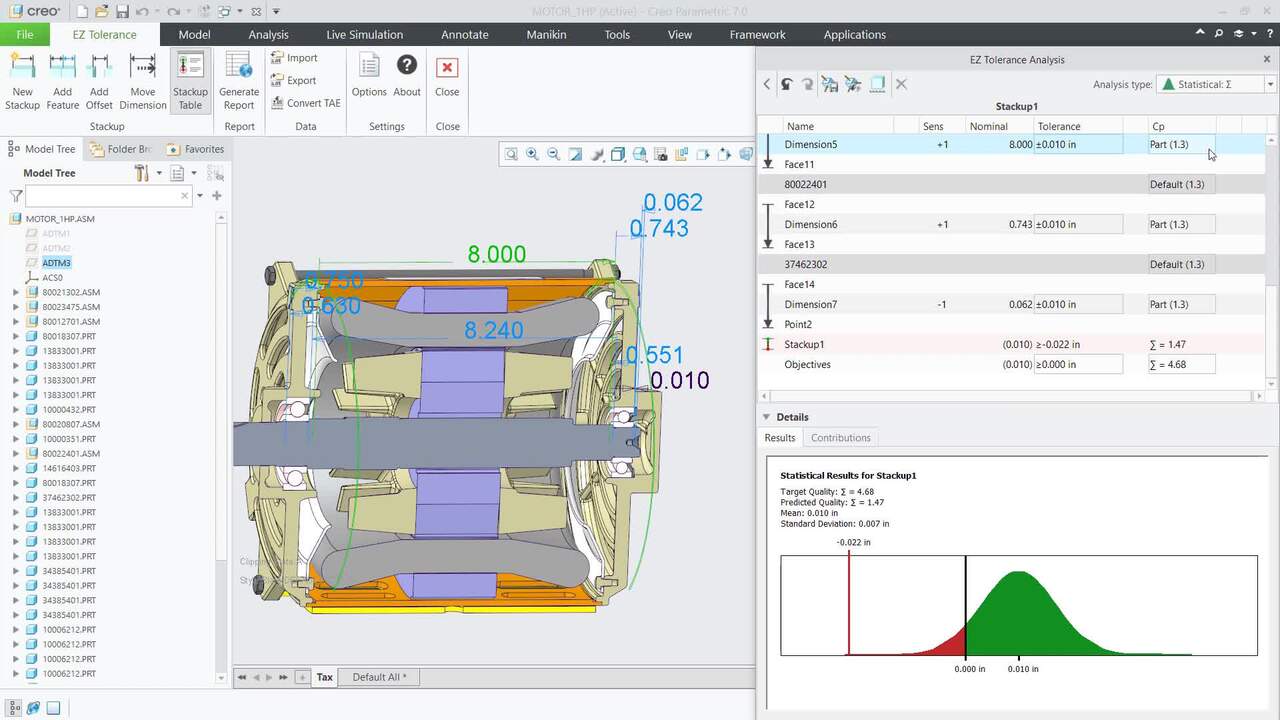
The benefits of Creo EZ Tolerance Analysis

The EZ Tolerance Analysis extension allows you to evaluate the impact of dimensioning on product designs before either prototyping or manufacturing, reducing the risk of error.
Learn More
null

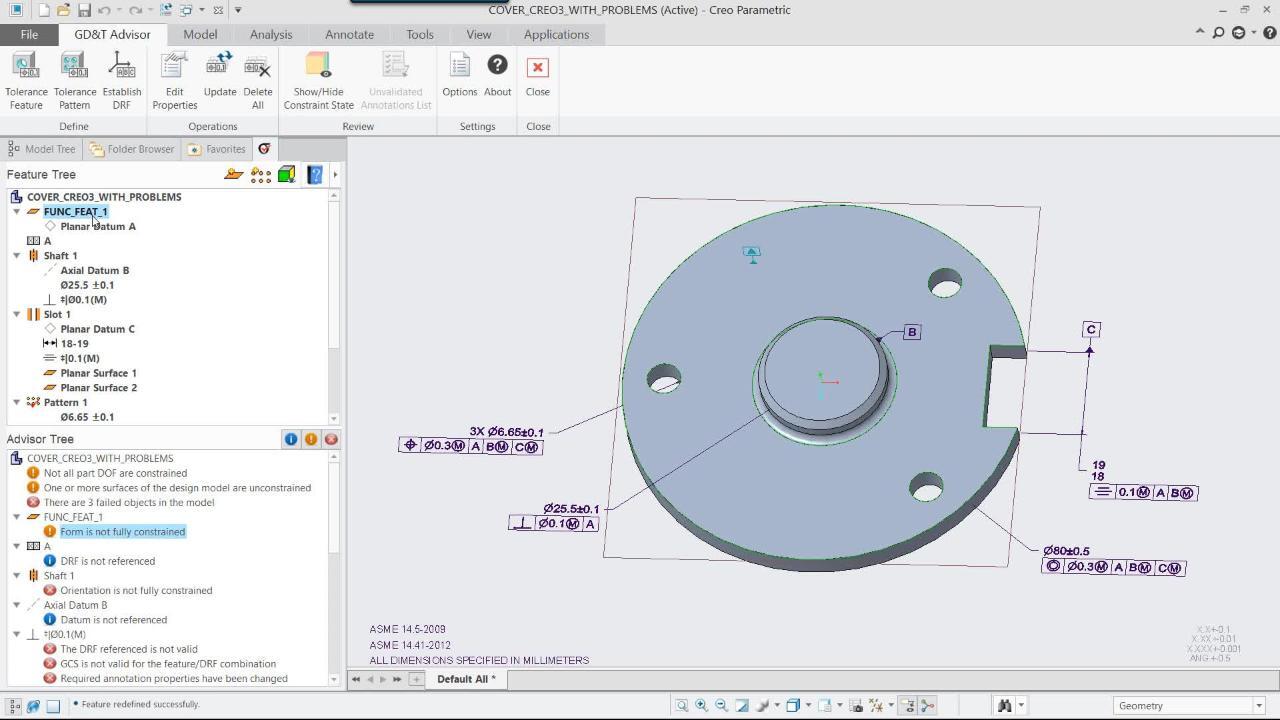
The benefits of Creo GD&T Advisor

The GD&T Advisor Advanced allows you to reuse the accurate parts of your legacy GD&T annotations while highlighting errors that they may have and providing recommendations on how best to resolve any uncovered problems.

Learn More